🧾 Introduction
Persistent fever is a frequent clinical challenge in tropical regions where malaria is highly prevalent. Many patients are treated empirically for malaria without laboratory confirmation.
However, persistent fever misdiagnosed as malaria can delay appropriate treatment and worsen outcomes.
This case discussion highlights a patient initially treated for malaria but ultimately diagnosed with typhoid fever, emphasizing the need for proper evaluation.

👤 Case Presentation
🧍 Patient Information
Age: 26 years
Gender: Male
Occupation: Trader
📌 Chief Complaint
Persistent fever for 6–8 days
📊 Associated Symptoms
General body weakness
Headache
Loss of appetite
Abdominal discomfort
Occasional loose stools
💊 Initial Diagnosis and Management
The patient was initially diagnosed with malaria based on:
Clinical symptoms
Endemic setting
🏥 Treatment Given
Artemisinin-based Combination Therapy (ACT)
Paracetamol
⚠️ Clinical Outcome
No improvement after treatment
Fever persisted
Symptoms gradually worsened Warning Signs (Missed Clues)
The following features suggested that the illness was not malaria:
Persistent fever beyond 5 days
Poor response to antimalarial therapy
Presence of gastrointestinal symptoms
Progressive weakness.Learn more about malaria symptoms in our guide malaria FAQs
👉 These signs raised suspicion of typhoid fever. Also read about typhoid FAQs
🧪 Diagnostic Evaluation
🔬 Investigations
Malaria Rapid Diagnostic Test (RDT): Negative
Full Blood Count: Mild leukopenia
Widal Test: Suggestive
Blood Culture: Positive for Salmonella typhi
✅ Final Diagnosis
Typhoid Fever (Initially Misdiagnosed as Malaria)
💡 Clinical Discussion
🔍 Why Misdiagnosis Occurs
High malaria prevalence leading to overdiagnosis
Empirical treatment without testing
Overlapping symptoms between malaria and typhoid
⚖️ Typhoid vs Malaria (Clinical Comparison)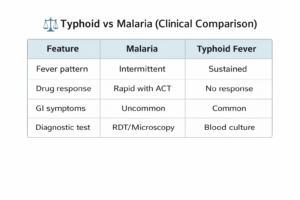
🧠 Clinical Insight
👉 Fever not responding to malaria treatment should prompt immediate reassessment
Consider:
Typhoid fever
Viral infections
Other bacterial infections
💊 Treatment and Outcome
🏥 Management
Intravenous Ceftriaxone
Oral Azithromycin as a step down therapy
Adequate hydration
📈 Outcome
Fever subsided within 3–5 days
Appetite improved
Full recovery achieved
🧠 Key Takeaways
Do not assume all fevers are malaria
Always confirm malaria with testing
Persistent fever (>5 days) requires further evaluation
Blood culture is the diagnostic gold standard for typhoid
Early diagnosis improves patient outcomes
📢 Public Health Message
In malaria-endemic regions, overdiagnosis of malaria remains a major issue.
👉 Proper diagnosis prevents complications and inappropriate drug use.See our article on rational prescribing.
🔚 Conclusion of the case of persistent fever misdiagnosed as malaria
This case of persistent fever misdiagnosed as malaria highlights the importance of clinical vigilance.
Timely investigations led to the correct diagnosis of typhoid fever, ensuring effective treatment and recovery.For more information see our guide on malaria-typhoid differences
📚 References
World Health Organization (WHO). Malaria and Typhoid Fever Guidelines
Centers for Disease Control and Prevention (CDC) – Typhoid Fever
Federal Ministry of Health Nigeria – National Malaria Guidelines
Cheesbrough M. District Laboratory Practice in Tropical Countries
Harrison’s Principles of Internal Medicine
⚠️Disclaimer
This article is for educational purposes only and should not replace professional medical advice, diagnosis, or treatment. Always consult a qualified healthcare provider for proper evaluation and care.