Introduction
Lung cancer is one of the leading causes of cancer-related deaths worldwide. Lung cancer symptoms may include persistent cough, chest pain, weight loss, and shortness of breath. Early detection is important for better outcomes.
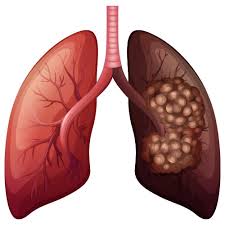
What is Lung cancer?
Lung cancer is a malignant disease that begins in the cells of the lungs. It occurs when abnormal cells grow uncontrollably, forming a tumor that interferes with normal breathing and oxygen exchange.
Pathophysiology of Lung Cancer (How Lung Cancer Develops)
Lung cancer develops through a stepwise process:
Exposure to toxins (especially cigarette smoke) → DNA damage
Mutation of oncogenes and tumor suppressor genes
Uncontrolled cell division → tumor formation
Spread via blood and lymphatics → metastasis
This explains the progressive nature of lung cancer symptoms.
Lung Cancer Causes
The major lung cancer causes include:
Cigarette smoking (primary cause)
Secondhand smoke exposure
Radon gas exposure
Occupational exposure (asbestos, arsenic)
Air pollution
Genetic susceptibility
Risk Factors for Lung Cancer
Key risk factors include:
Smoking (dose-dependent ↑ risk)
Passive smoking
Chronic lung diseases
Family history of cancer
Environmental exposure
Types of Lung Cancer
Non-Small Cell Lung Cancer (NSCLC)
Adenocarcinoma
Squamous cell carcinoma
Large cell carcinoma
Small Cell Lung Cancer (SCLC)
Rapid progression
Early metastasis
Strongly associated with smoking
Lung Cancer Symptoms (Key Warning Signs)
The most common lung cancer symptoms include:
Persistent cough lasting more than 3 weeks
Chest pain (worsens with breathing or coughing)
Shortness of breath
Coughing up blood (hemoptysis)
Hoarseness of voice
Fatigue
Early Lung Cancer Symptoms and Warning Signs
Early lung cancer symptoms are often mild and easily overlooked:
Mild persistent cough
Unexplained weight loss
Loss of appetite
Recurrent chest infections
👉 Lung cancer symptoms may resemble Tuberculosis or Pneumonia in early stages.
Common Lung Cancer Symptoms in Men and Women
Although similar in both sexes, lung cancer symptoms may vary slightly:
Men: More smoking-related lung damage
Women: More adenocarcinoma cases, even in non-smokers
Shared symptoms include:
Persistent cough
Breathlessness
Chest discomfort
Advanced Lung Cancer Symptoms and Complications
Advanced lung cancer symptoms indicate disease progression:
Severe breathlessness
Persistent chest pain
Bone pain (metastasis)
Neurological symptoms (brain involvement)
Severe weight loss (cachexia)
When Lung Cancer Symptoms Become Serious
Seek urgent medical attention when lung cancer symptoms become severe:
Coughing blood
Severe chest pain
Difficulty breathing
Rapid, unexplained weight loss
Early intervention improves survival outcomes.
Staging of Lung Cancer (Disease Progression)
Stage I: Tumor confined to lung
Stage II: Spread to nearby lymph nodes
Stage III: Regional spread
Stage IV: Distant metastasis
Staging guides prognosis and treatment decisions.
Diagnosis of Lung Cancer symptoms
Imaging
Chest X-ray
CT scan
PET scan
Laboratory and Procedures
Sputum cytology
Bronchoscopy
Biopsy (gold standard)
Molecular testing (EGFR, ALK mutations)
Biopsy confirms diagnosis and guides targeted therapy.
Lung Cancer Treatment Options
1. Surgery
Indicated in early-stage lung cancer
Removes localized tumor
2. Radiotherapy
Used when surgery is not possible
Targets cancer cells
3. Chemotherapy
Kills rapidly dividing cancer cells
4. Targeted Therapy
Acts on specific genetic mutations
5. Immunotherapy
Enhances immune response against cancer
Complications of Lung Cancer
Possible complications include:
Pleural effusion
Respiratory failure
Metastasis to brain, liver, and bones
Cachexia
Prevention of Lung Cancer
Avoid smoking
Reduce exposure to pollutants
Use protective equipment in high-risk jobs
Regular screening for high-risk individuals
When to See a Doctor
Consult a healthcare provider if you notice:
Persistent cough
Blood in sputum
Unexplained weight loss
Recurrent chest infections
FAQ (Lung Cancer Symptoms and Treatment)
Can lung cancer be cured?
Yes, if detected early, lung cancer can be treated successfully.
is lung cancer always caused by smoking?
No, environmental and genetic factors also contribute.
How fast does lung cancer spread?
Small cell lung cancer spreads faster than non-small cell types.
Reference
World Health Organization (WHO). Lung cancer: Key facts and global statistics. Available at: https://www.who.int
Centers for Disease Control and Prevention (CDC). Lung cancer overview and prevention guidelines. Available at: https://www.cdc.gov
American Cancer Society. Lung cancer: Causes, symptoms, and treatment. Available at: https://www.cancer.org
Reviewed by: Medical Practitioner
Category: Respiratory Diseases
Keywords: lung cancer symptoms, lung cancer causes, early signs of lung cancer, lung cancer treatment
Disclaimer:
This content is for educational purposes only and does not replace professional medical advice. Always consult a qualified healthcare provider.