Diabetes Complications You Should Know
Diabetes is a chronic condition that affects how your body processes blood glucose (sugar). When blood sugar levels remain high for months or years, they can damage blood vessels, nerves, and vital organs. These health problems are known as h complications.
The good news is that many diabetes complications are preventable. Early diagnosis, proper treatment, healthy lifestyle choices, and regular medical check-ups can significantly reduce the risk of serious complications.
In this article, you’ll learn about the major diabetes complications, their warning signs, risk factors, and practical steps to protect your health.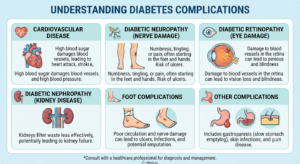
What Are Diabetes Complications?
Diabetes complications are medical conditions that develop because of prolonged high blood sugar (hyperglycemia). Over time, excess glucose damages small and large blood vessels, reducing blood flow and affecting organs throughout the body.
Complications may develop gradually without noticeable symptoms, making regular screening essential for people living with diabetes.
Diabetes complications are broadly divided into:
Acute (short-term) complications, which require immediate medical attention.
Chronic (long-term) complications, which develop slowly over several years.
Acute Diabetes Complications
Acute diabetes complications can become life-threatening if not treated promptly.
1. Hypoglycemia (Low Blood Sugar)
Hypoglycemia occurs when blood sugar falls below normal levels. It is most common in people taking insulin or certain diabetes medications.
Symptoms
Sweating
Shaking
Hunger
Fast heartbeat
Dizziness
Headache
Blurred vision
Confusion
Difficulty concentrating
Loss of consciousness (severe cases)
Causes
Skipping meals
Taking too much insulin
Certain diabetes medications
Excessive physical activity
Drinking alcohol without eating
What to Do
Treat mild hypoglycemia immediately with 15–20 grams of fast-acting carbohydrates, such as glucose tablets, fruit juice, or regular (non-diet) soft drinks. Recheck your blood sugar after 15 minutes and repeat treatment if necessary. Severe hypoglycemia requires urgent medical attention.
2. Hyperglycemia (High Blood Sugar)
Hyperglycemia develops when blood sugar becomes excessively high due to insufficient insulin, illness, stress, or missed medications.
Symptoms
Excessive thirst
Frequent urination
Blurred vision
Fatigue
Dry mouth
Headache
Persistent hyperglycemia can lead to serious complications if left untreated.
3. Diabetic Ketoacidosis (DKA)
Diabetic ketoacidosis (DKA) is a medical emergency that occurs when the body breaks down fat rapidly because it cannot use glucose for energy. This produces ketones, causing the blood to become acidic.
DKA is more common in people with Type 1 diabetes but can also occur in some people with Type 2 diabetes.
Warning Signs
Severe thirst
Frequent urination
Nausea and vomiting
Abdominal pain
Fruity-smelling breath
Deep, rapid breathing
Extreme weakness
Confusion
Without immediate treatment, DKA can lead to coma or death.
4. Hyperosmolar Hyperglycemic State (HHS)
Hyperosmolar Hyperglycemic State (HHS) is another life-threatening diabetes complication, usually affecting older adults with Type 2 diabetes.
Unlike DKA, HHS usually occurs without significant ketone production but involves extremely high blood sugar levels and severe dehydration.
Symptoms
Extreme thirst
Very dry mouth
High fever
Confusion
Hallucinations
Weakness on one side of the body
Seizures
Loss of consciousness
Emergency medical treatment is essential.
Long-Term Diabetes Complications
Long-term diabetes complications often develop slowly over many years of poorly controlled blood sugar. Many people experience no symptoms until significant damage has already occurred.
Diabetes Complications Affecting the Heart and Blood Vessels
People with diabetes have a significantly higher risk of cardiovascular disease.
High blood sugar damages blood vessels, increases inflammation, and accelerates the buildup of fatty deposits (atherosclerosis). As a result, diabetes greatly increases the risk of:
Heart attack
Stroke
Peripheral artery disease
High blood pressure
Warning Signs
Seek immediate medical care if you experience:
Chest pain
Shortness of breath
Sudden weakness
Difficulty speaking
Facial drooping
Severe dizziness
Maintaining healthy blood sugar, blood pressure, and cholesterol levels can substantially reduce cardiovascular risk.
Diabetes Complications Affecting the Kidneys (Diabetic Nephropathy)
The kidneys filter waste products from the blood. Persistent high blood sugar damages the tiny filtering units (glomeruli), eventually leading to chronic kidney disease.
Early kidney damage often causes no symptoms, making regular urine and blood tests essential.
Symptoms
As kidney disease progresses, symptoms may include:
Swollen feet and ankles
Fatigue
Poor appetite
Nausea
Itching
Reduced urine output
Untreated diabetic kidney disease can progress to kidney failure requiring dialysis or kidney transplantation.
Diabetes Complications Affecting the Eyes (Diabetic Retinopathy)
Diabetic retinopathy occurs when high blood sugar damages the blood vessels in the retina.
It is one of the leading causes of preventable blindness among adults.
Symptoms
Early stages may cause no symptoms.
As damage worsens, people may notice:
Blurred vision
Floaters
Difficulty seeing at night
Dark spots
Partial vision loss
Comprehensive dilated eye examinations at least once a year help detect problems before vision is permanently affected.
Diabetes Complications Affecting the Nerves (Diabetic Neuropathy)
Nerve damage is among the most common diabetes complications.
High blood sugar gradually injures nerves throughout the body, especially those supplying the feet and hands.
Symptoms
Burning pain
Tingling sensations
Numbness
Sharp stabbing pain
Muscle weakness
Loss of balance
Reduced sensation to heat or injury
Because reduced sensation increases the risk of unnoticed injuries, daily foot inspection is essential for people with diabetes.
Diabetes Complications Affecting the Feet
Diabetic foot problems usually result from a combination of poor blood circulation and nerve damage.
Small cuts or blisters may become infected because they go unnoticed and heal slowly.
Warning Signs
Foot ulcers
Redness
Swelling
Persistent wounds
Skin discoloration
Bad-smelling discharge
Blackened tissue (gangrene)
Without prompt treatment, severe infections may lead to amputation.
Regular foot examinations, proper footwear, and early treatment of wounds significantly reduce this risk.
Diabetes Complications Affecting the Skin
People with diabetes are more likely to develop skin problems because high blood sugar weakens the immune system and slows wound healing.
Common skin complications include:
Bacterial skin infections
Fungal infections
Dry, itchy skin
Slow-healing cuts and wounds
Diabetic dermopathy (light brown, scaly patches)
Prevention Tips
Keep blood sugar under control.
Bathe regularly and moisturize dry skin.
Treat cuts and scratches promptly.
Seek medical care if redness, swelling, or pus develops.
Diabetes Complications Affecting the Mouth and Gums
High blood sugar encourages bacterial growth in the mouth, increasing the risk of dental disease.
Possible Problems
Bleeding gums
Gingivitis
Periodontitis
Tooth loss
Persistent bad breath
Dry mouth
Maintaining good oral hygiene and visiting a dentist regularly can help prevent these complications.
Diabetes Complications Affecting Sexual Health
Diabetes may affect sexual function in both men and women due to nerve damage, poor circulation, and hormonal changes.
In Men
Erectile dysfunction
Reduced sexual desire
Ejaculatory problems
In Women
Vaginal dryness
Pain during intercourse
Reduced sexual desire
Recurrent vaginal yeast infections
Many of these problems improve with good diabetes control and appropriate medical treatment.
Mental Health Complications of Diabetes
Living with diabetes can affect emotional well-being.
Some people experience:
Depression
Anxiety
Diabetes-related distress
Burnout from daily diabetes management
Mental health support, counseling, and diabetes education can improve quality of life and treatment adherence.
Who Is at Greater Risk of Diabetes Complications?
Several factors increase the likelihood of developing diabetes complications, including:
Poor blood sugar control
Long duration of diabetes
High blood pressure
High cholesterol
Smoking
Obesity
Physical inactivity
Kidney disease
Family history of cardiovascular disease
The more risk factors a person has, the greater the chance of developing serious complications.
How to Prevent Diabetes Complications
Although diabetes cannot always be cured, many complications can be prevented or delayed.
Monitor Blood Sugar Regularly
Follow your healthcare provider’s recommendations for checking blood glucose and HbA1c levels.
Take Medications as Prescribed
Never stop insulin or diabetes medications without medical advice.
Eat a Balanced Diet
Choose:
Vegetables
Fruits in moderation
Whole grains
Lean protein
Healthy fats
Limit sugary drinks, processed foods, and excessive salt.
Stay Physically Active
Aim for at least 150 minutes of moderate-intensity exercise each week, unless advised otherwise by your healthcare provider.
Maintain a Healthy Weight
Even modest weight loss can improve blood sugar control and reduce cardiovascular risk.
Stop Smoking
Smoking greatly increases the risk of heart disease, stroke, kidney disease, and diabetic foot complications.
Attend Regular Medical Check-ups
Routine screening helps detect complications early.
Important examinations include:
HbA1c testing
Blood pressure measurement
Cholesterol testing
Kidney function tests
Dilated eye examination
Comprehensive foot examination
Dental check-ups
When Should You Seek Emergency Medical Care?
Seek immediate medical attention if you experience:
Severe chest pain
Sudden weakness or paralysis
Difficulty speaking
Severe shortness of breath
Persistent vomiting
Confusion
Loss of consciousness
Fruity-smelling breath
Rapid, deep breathing
Blood sugar that remains dangerously high or very low despite treatment
Early treatment can save lives and prevent permanent organ damage
.Key Takeaways
Diabetes complications can affect nearly every organ in the body.
High blood sugar damages blood vessels and nerves over time.
Many complications develop silently before symptoms appear.
Good blood sugar control greatly reduces the risk of complications.
Healthy lifestyle habits, regular medical care, and early treatment are the best ways to stay healthy.
Frequently Asked Questions (FAQs)
What are the most common diabetes complications?
Common complications include heart disease, stroke, kidney disease, diabetic retinopathy, diabetic neuropathy, diabetic foot ulcers, and gum disease.
Can diabetes complications be prevented?
Yes. Good blood sugar control, healthy eating, regular exercise, taking medications as prescribed, and routine medical check-ups can significantly reduce the risk.
Which diabetes complication is the most dangerous?
Heart disease is the leading cause of death in people with diabetes. Diabetic ketoacidosis (DKA) and Hyperosmolar Hyperglycemic State (HHS) are life-threatening emergencies requiring immediate treatment.
Does every person with diabetes develop complications?
No. Many people with diabetes live healthy lives without serious complications by maintaining good blood sugar control and following medical advice.
How often should people with diabetes have eye examinations?
Most adults with diabetes should have a comprehensive dilated eye examination at least once a year, or more often if recommended by an eye specialist.
Can diabetes cause kidney failure?
Yes. Poorly controlled diabetes is one of the leading causes of chronic kidney disease and kidney failure.
Why is foot care important in diabetes?
Nerve damage and poor circulation increase the risk of infections, ulcers, and amputations. Daily foot inspection and proper footwear are essential.
Does controlling blood sugar reduce complications?
Yes. Maintaining blood sugar within the target range significantly lowers the risk of both short-term and long-term diabetes complications.
Clinician Review
Medically Reviewed by: certified Clinician
This article has been reviewed for medical accuracy using current evidence-based clinical guidelines. It is intended for educational purposes and should not replace individualized medical advice from a qualified healthcare professional.
Medical Disclaimer
The information provided in this article is for educational purposes only and is not intended to replace professional medical advice, diagnosis, or treatment. Always consult your doctor or another qualified healthcare provider regarding any medical condition. Never ignore or delay seeking professional medical care because of information you have read in this article.
References
-
American Diabetes Association. Standards of Care in Diabetes—2026. https://diabetesjournals.org/care
-
World Health Organization (WHO). Diabetes. https://www.who.int/news-room/fact-sheets/detail/diabetes
-
Centers for Disease Control and Prevention (CDC). Diabetes. https://www.cdc.gov/diabetes
-
National Institute of Diabetes and Digestive and Kidney Diseases (NIDDK). Diabetes Overview. https://www.niddk.nih.gov/health-information/diabetes